Internal database
1. Users authorize file storage access
Your user authorizes your application to access their file storage service (e.g., Google Drive, Dropbox) via an OAuth or similar authorization flow through Merge Link.
2. Fetch files and folders
Utilize GET /Files and GET /Folders to fetch all relevant documents and folders from the designated file storage platform associated with the company.
Set up webhooks so that the latest file updates are being reflected.
3. Check user access to files
You may want to make sure other un-linked users can only see the files they have access to.
Use the query parameter expand=permissions with GET /Files to see who has access to a file. Additionally, fetch user’s email addresses in GET /Users to match your product’s users with the 3rd-party platform’s users.
4. Database population
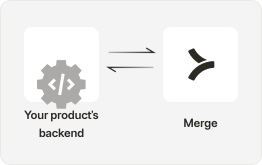
Populate the internal database with the fetched documents, ensuring comprehensive indexing and organization for efficient search capabilities.
5. Build search optimization and filters
Enhance your document search feature with optimized algorithms and filters to facilitate quick and accurate document retrieval based on various search parameters, such as file names, content keywords, and metadata. You can even leverage AI to help get answers to your employees with the documents’ data.
6. Create a friendly UI search experience
Build the frontend of how you want the search user experience to be. Employees can now easily find relevant documents and answers in an instant!