
Source leads
1. User authorizes access
Your user authorizes your application to access their CRM (e.g. Salesforce, Hubspot) via an OAuth or similar authorization flow through Merge Link.
2. Fetch leads
Utilize the GET /leads endpoint to fetch existing leads from your customer’s CRM.
3. Fetch contacts
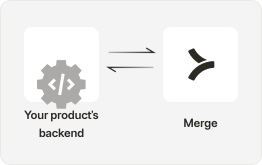
Utilize the GET /contacts endpoint to fetch existing contacts from your customer’s CRM.
If there are any custom CRM fields that need to be pulled in, you can use Remote Fields.
4. Create contacts and leads
As new contacts and leads get sourced, push them to your customers’ CRMs using the POST /contacts and POST /leads endpoints.
5. Refresh contact and lead data regularly
Regularly call the GET /contacts and GET /leads endpoints using the modified_after query parameter to track updates to contacts and leads. Now your customers’ contacts and leads in their CRM are always up-to-date!
Use webhooks for efficient and real-time syncs.