Financial analysis
1. Your customer authorizes accounting integration
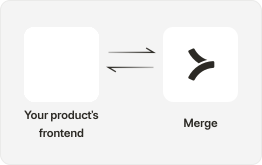
In your application, have your user authorize their accounting integration via Merge Link. Merge will begin syncing data from your customer’s accounting platform.
2. Retrieve chart of accounts
You can retrieve a Chart of Accounts from your user’s accounting platform with the following endpoints: Pull in all Ledger Accounts with GET /accounts and pull in multi-entity scenarios with GET /company-info.
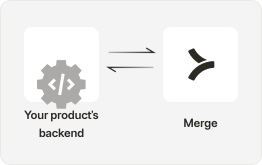
Need help visualizing Merge’s Accounting Models? Refer to our Help Center article.
3. Compile and categorize transactions (P&L, balance sheet)
To retrieve all transactions that have affected your customer’s ledger, use the following endpoints: GET /journal-entries, invoices, expenses, payments, vendor-credits, credit-notes, transactions.
4. Get tracking categories
For references that add context to the transactions, like Classes, Departments, Vendors, and Customers, use GET /tracking-categories, and /contacts.
5. Construct transaction views
In your product, sum and categorize the transaction data how you wish.
6. Allow your users to be more strategic
With the work of analyzing transactions handled, your product can help your users drive more strategic business insights, whether it’s runway analysis, budgets, or forecasting revenue.